
Standard Traffic Pattern
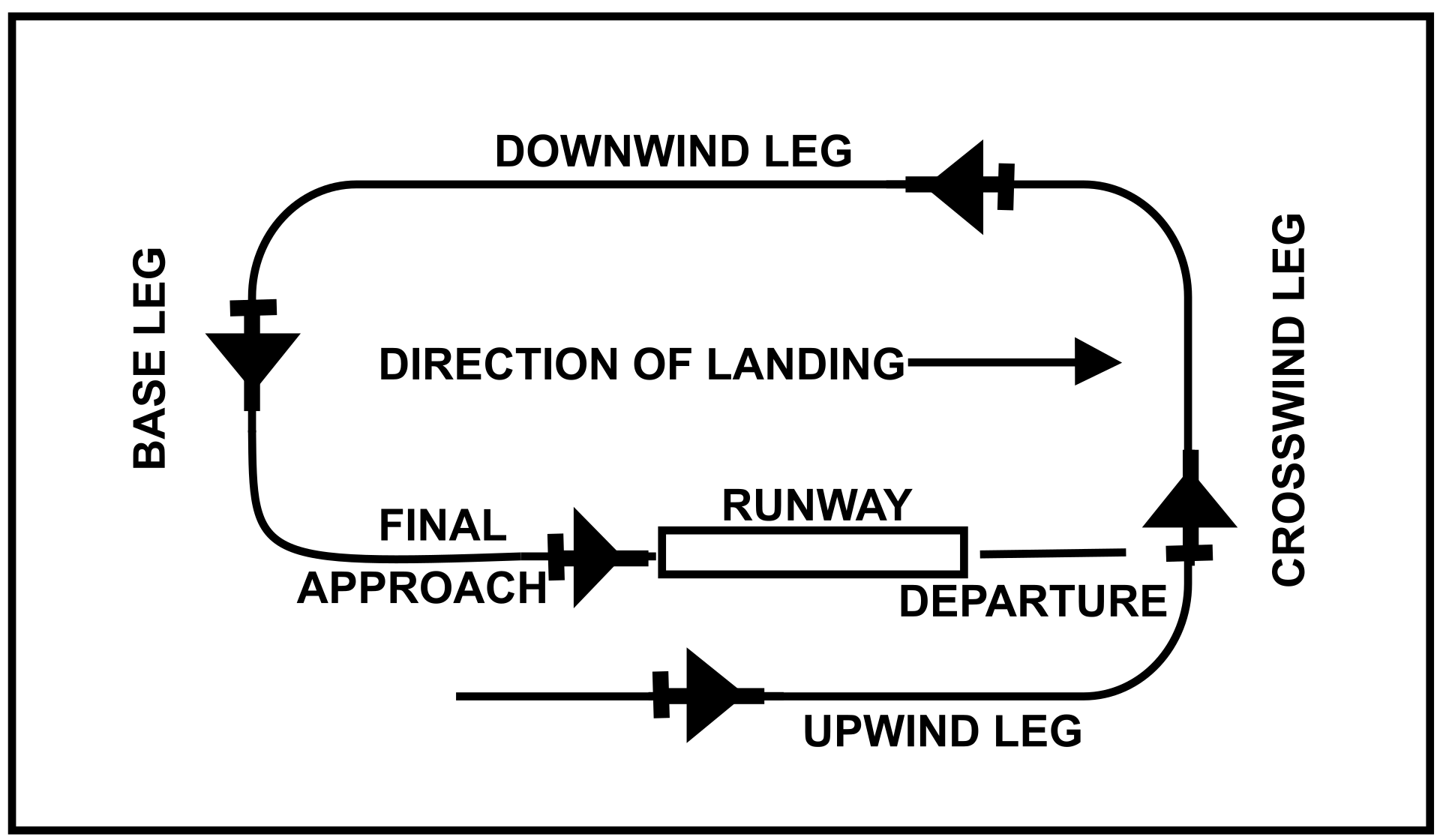
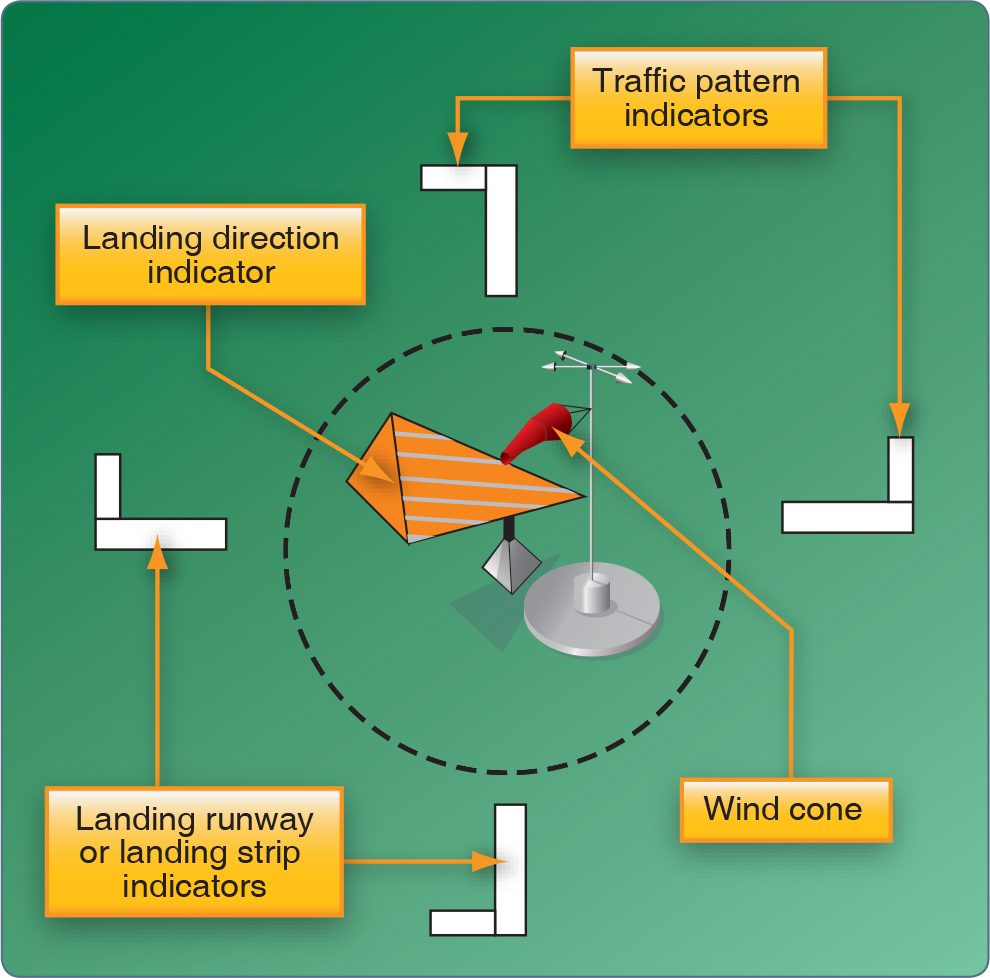
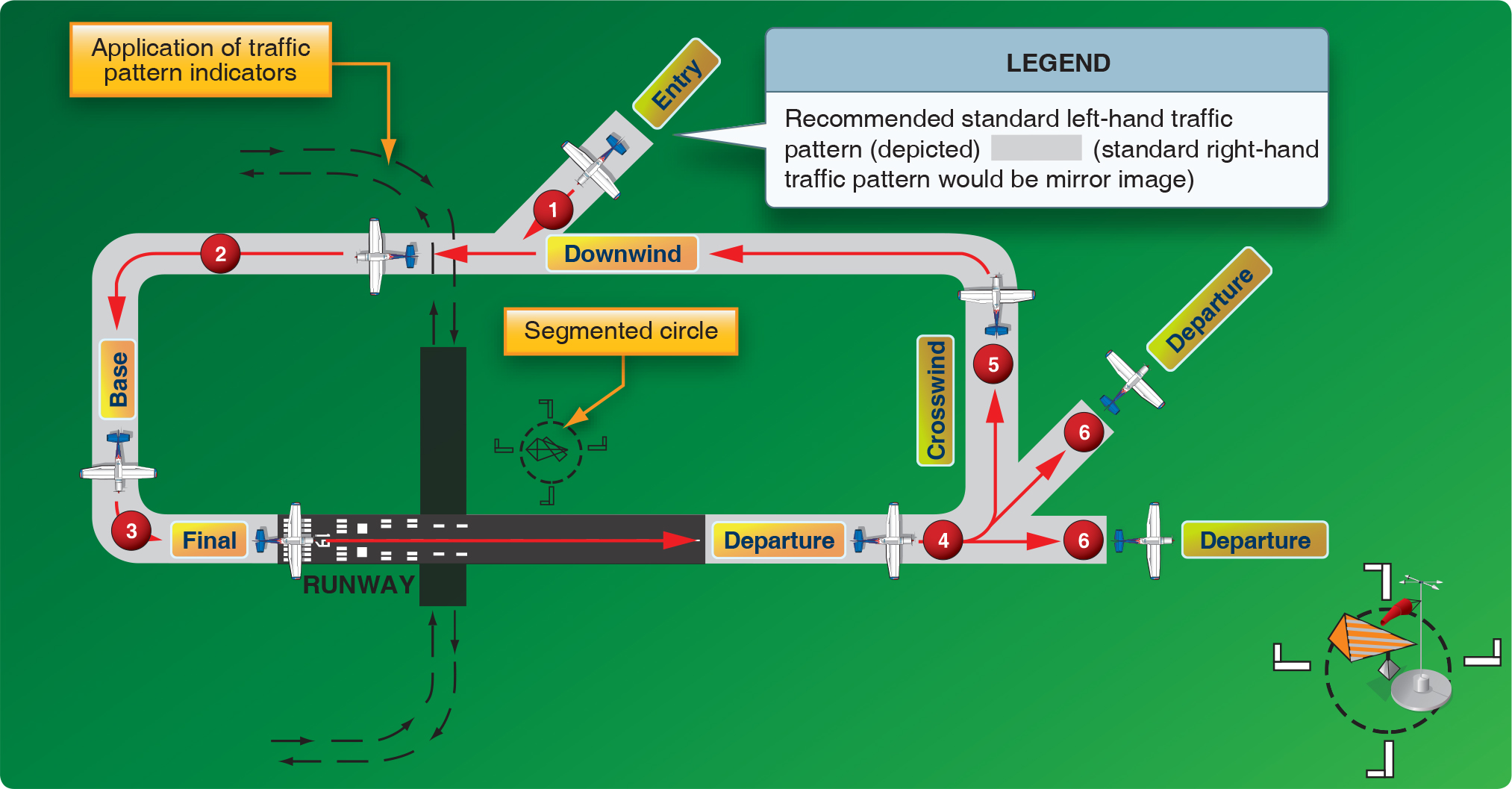
Standard Traffic Pattern - Surveyed elevation is 96 feet msl. However, that's not always the case. For a typical trainer such as a cessna 172, a “standard” traffic pattern is flown to the left and at 1,000 feet above ground level (agl). Web the recommended entry position to an airport traffic pattern is to enter 45° at the midpoint of the downwind leg at traffic pattern altitude. Airport owners and operators, in coordination with the faa, are responsible for establishing traffic patterns. The use of a common altitude at a given airport is the key factor in minimizing the risk of collisions at airports without operating control towers. But legally, it depends on the type of airspace. This article gives an overview of how to fly a standard traffic pattern. A flight path parallel to the landing runway in the direction of landing. Web so, what is “the pattern”? Web when i was a student, i learned the golden rule of standard traffic pattern entries: Web it is important to fly standard traffic pattern procedures to ensure the safe and orderly flow of aircraft to and from an airport. The vfr traffic pattern is a standard procedure for departing from, or arriving at an airport. The traffic pattern is comprised of several components which standardized flow of aircraft, at a. At an airport, the pattern (or circuit) is a standard path for coordinating air traffic. This article gives an overview of how to fly a standard traffic pattern. Find further pattern information in the chart supplement, including traffic pattern altitude. Web so, what is “the pattern”? To be sure, you can find the traffic pattern altitude for most airports in the a/fd. Web the faa recommends standard traffic pattern flows at nontowered airports in an effort to maintain order and a safe environment for aircraft arrivals and departures. The standard traffic pattern altitude is 1,000 feet above aerodrome elevation, with turbine aircraft maintaining 1,500 feet above aerodrome elevation. Know where to look for details on the pattern. Web traffic pattern procedures develop the ability to stay safely and efficiently arrive at an uncontrolled airport, or after arrival, utilize the traffic pattern. To assure that air traffic flows into. Surveyed elevation is 96 feet msl. Web so, what is “the pattern”? However, that's not always the case. Web standard airport trafic patterns. Web location information for ksfb. The traffic pattern altitude is usually 1,000 feet above the elevation of the airport surface. View all airports in florida. View all airports in florida. The use of a common altitude at a given airport is the key factor in minimizing the risk of. Web it is important to fly standard traffic pattern procedures to ensure the safe and orderly. It’s the path you will fly when leaving and returning to the airport, specifically the runway. Web standard airport trafic patterns. Web it is important to fly standard traffic pattern procedures to ensure the safe and orderly flow of aircraft to and from an airport. Well, for a variety of reasons, yes, you should. However, the faa encourages airport owners. Web how to fly a traffic pattern. The standard traffic pattern altitude is 1,000 feet above aerodrome elevation, with turbine aircraft maintaining 1,500 feet above aerodrome elevation. Web it is important to fly standard traffic pattern procedures to ensure the safe and orderly flow of aircraft to and from an airport. View all airports in florida. Web the recommended entry. Web standard airport trafic patterns. Web so, what is “the pattern”? Find further pattern information in the chart supplement, including traffic pattern altitude. Web the standard traffic pattern altitude is 1,000 feet above the airport elevation. The use of a common altitude at a given airport is the key factor in minimizing the risk of collisions at airports without operating. Web the standard traffic pattern altitude is 1,000 feet above the airport elevation. This includes specific instructions on how to enter back into the pattern after spending some time practicing maneuvers at a higher altitude away from the airport. Web an airfield traffic pattern is a standard path followed by aircraft when taking off or landing while maintaining visual contact. The traffic pattern altitude is usually 1,000 feet above the elevation of the airport surface. Right pattern information is listed for an airport in a vfr sectional, with the abbreviation “rp” followed by the runway number. Web standard airport trafic patterns. Web an airfield traffic pattern is a standard path followed by aircraft when taking off or landing while maintaining. Surveyed elevation is 96 feet msl. Web so, what is “the pattern”? It’s the path you will fly when leaving and returning to the airport, specifically the runway. Located 16 miles ne of orlando, florida on 3000 acres of land. Web the standard traffic pattern consists of a downwind, base, and final leg. To be sure, you can find the traffic pattern altitude for most airports in the a/fd. Surveyed elevation is 54 feet msl. Web the standard traffic pattern altitude is 1,000 feet above the airport elevation. Web when i was a student, i learned the golden rule of standard traffic pattern entries: Web how to fly a traffic pattern. A flight path parallel to the landing runway in the direction of landing. Web how to fly a traffic pattern. Surveyed elevation is 54 feet msl. The use of a common altitude at a given airport is the key factor in minimizing the risk of. Web the standard traffic pattern consists of a downwind, base, and final leg. View all airports in florida. Web complete aeronautical information about orlando sanford international airport (orlando, fl, usa), including location, runways, taxiways, navaids, radio frequencies, fbo information, fuel prices, sunrise and. Right pattern information is listed for an airport in a vfr sectional, with the abbreviation “rp” followed by the runway number. This is the best and safest entry, because it enables you to see other pilots in the pattern and enables those in the pattern to see you. It’s the path you will fly when leaving and returning to the airport, specifically the runway. Surveyed elevation is 96 feet msl. View all airports in florida. Web the standard traffic pattern is a rectangular pattern consisting of an upwind, crosswind, downwind, and final approach leg. Web so, what is “the pattern”? On this leg you will likely have a tailwind, assuming the wind is in the direction of the runway. For a typical trainer such as a cessna 172, a “standard” traffic pattern is flown to the left and at 1,000 feet above ground level (agl).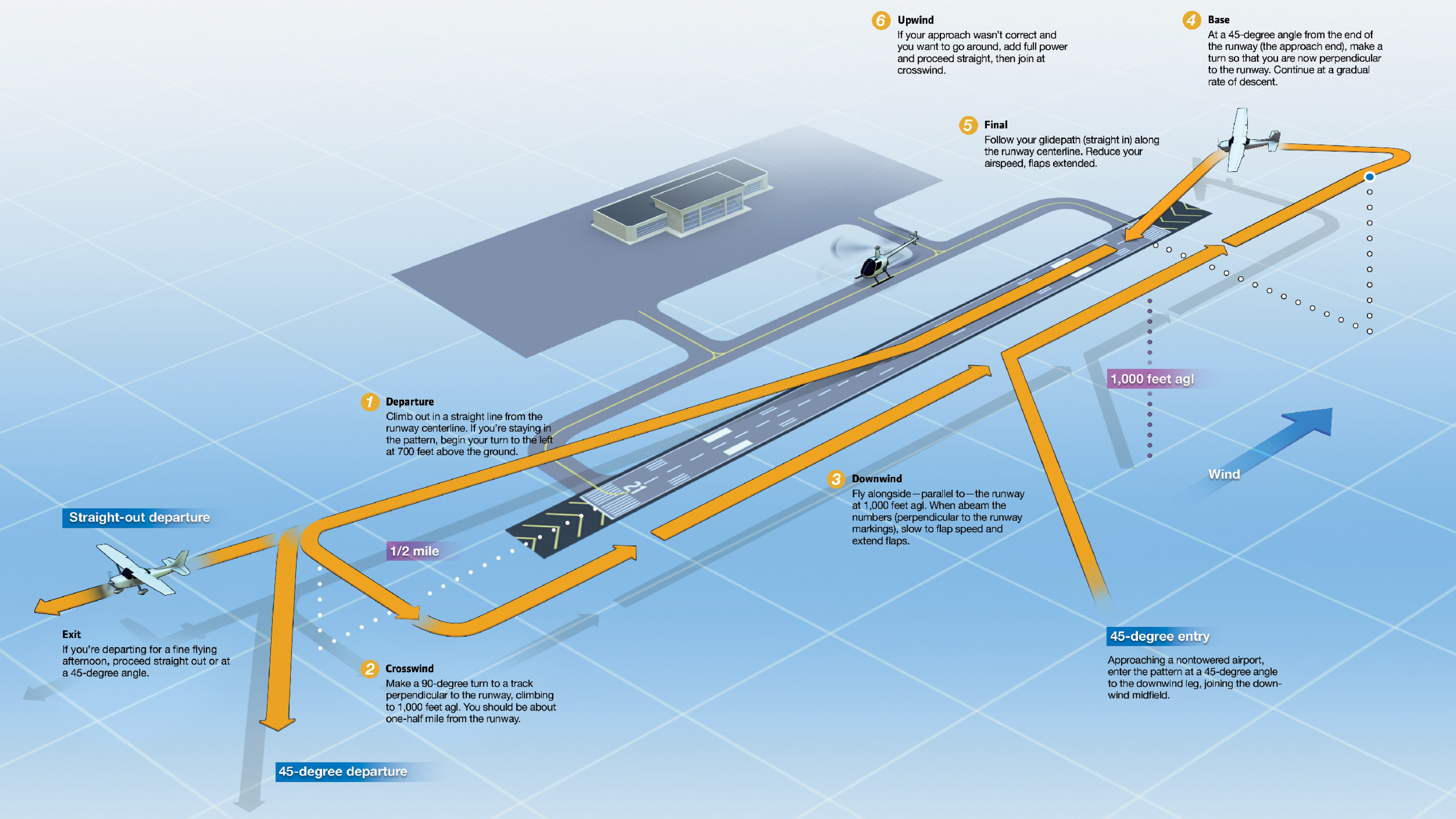
Technique The traffic pattern AOPA
/Traffic_patterns_depicted_in_FAA-H-8083-25-56a058ce3df78cafdaa1229b.jpg)
How to Fly a General Aviation Traffic Pattern

How Do You Enter And Exit The Traffic Pattern At An Uncontrolled Airport?
Everything You Should Know About the Airport Traffic Pattern
Procedures and Airport Operations Traffic Patterns Learn to Fly Blog

Airport Traffic Patterns How Airplanes Avoid MidAir Collisions

Flying Traffic Pattern Tutorial Traffic, Tutorial, Pattern
Procedures and Airport Operations Traffic Patterns Learn to Fly Blog
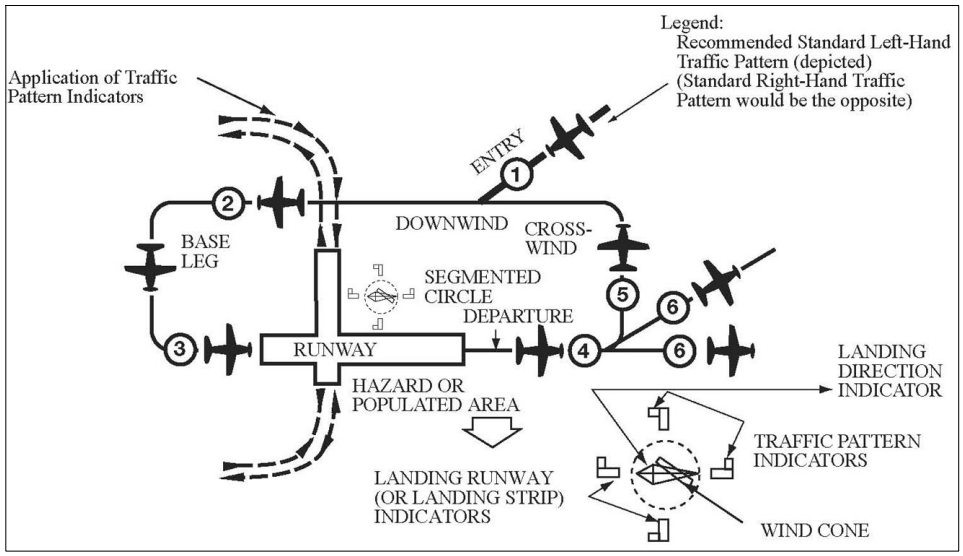
Traffic Pattern Operations
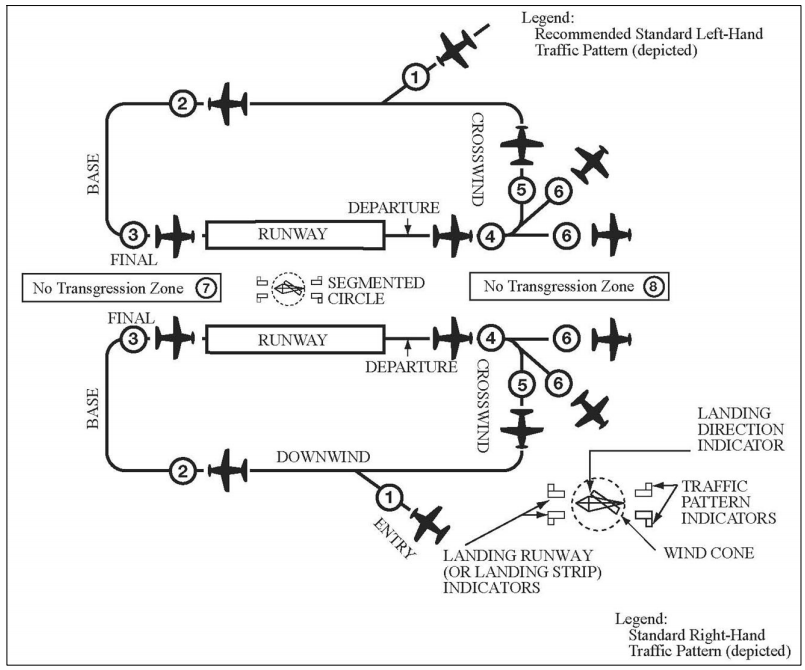
Traffic Pattern Operations
Web Location Information For Ksfb.
Web When I Was A Student, I Learned The Golden Rule Of Standard Traffic Pattern Entries:
This Includes Specific Instructions On How To Enter Back Into The Pattern After Spending Some Time Practicing Maneuvers At A Higher Altitude Away From The Airport.
Airport Owners And Operators, In Coordination With The Faa, Are Responsible For Establishing Traffic Patterns.
Related Post: